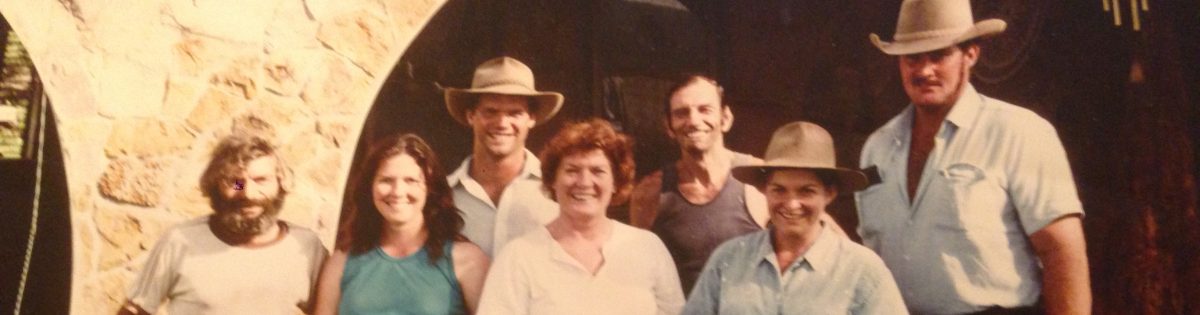
Peter and I were dispatched in the next morning’s mists to set in place our shiny new posts and rails. Integral to our day’s chore was a tool unfamiliar to most modern eyes, the adze.
An adze is sort of an ax with its head turned sideways. Whereas the cutting edge on an axe is in line with the handle, on an adze the edge runs perpendicular, as on a hoe. When raised directly overhead and swung between one’s feet an adze bites into a log and splinters off a chip. In this manner a tradesman can taper an end or cut a notch. Tapered rails fit nicely into receiving holes, and logs notched and stacked form cabin walls.
For every generation from the ancient Egyptians to American pioneers, for every community who’s ever built their lives on unbroken ground, the adze was known, used, and appreciated. The adze has been since time beyond memory the knife which butters the daily bread of a hand-hewn existence.
It has, sadly, also likely sliced through more ankles than any other hand tool. Reach and feel the bottom of your shinbone by your ankle. Flex your foot upward. Feel that big important rope doing its job? I’d never really noticed it myself, until that morning with Peter, when I feared for the well-being of the good man’s tendon tibialis anterior with every swing he took.
Fortunately, Peter knew his adze from a hole in the ground. It was great to watch him, concentrating so completely, sending wood chips flying with precise chops, a veritable outback sculptor deftly shaping the literal structure of our lives.
As Peter squared the rails’ ends, I cut lengths of wire we’d need to secure the new rails to their posts. With the rails in place Peter showed me how to affix the wire with what he called a cobbincoe, the name presumably a linguistic residue from the great 19th century Australian coachworks Cobb & Co. It’s a nifty method of tightening the wires securely and neatly using fencing pliers as a lever, akin to the key on a sardine can.
With our replacement rails in place Peter and I turned our attention to replacing rotted posts. We wrangled the dead meat out of the existing postholes then used shovel and digging bar to upgrade and deepen the holes to the new standard Charlie was insisting upon for the round yard. The going was slow in the hardpan earth, the necessary three feet a long way down.
When each new hole was ready Peter and I would select a post and extract it from the pile. With my recalibrated antennae I sensed within this step a great potential peril to those fleshy tentacles I’ve come to know and love called ‘my fingers’. Sure, mangling one’s digits is preferable to losing one’s head to a split-rim truck tire, or a stroppy horse and a Ghost Gum branch, but being unable to count to ten without taking one’s shoes off will doubtless put a dent in one’s day nonetheless. That gruesome possibilities lie dormant within even relatively benign moments such as moving a log out of an unstable stack was an understanding I’d come to embrace. I was realizing my choices were stark; either be crushed by the reality of latent doom and flee Bullo River, or, up my ringer game. At this point, two months into my outback life, I knew I wasn’t going anywhere. I was by now all in on the challenge, fueled by my conceptual pursuit of hard physical work as honorable and, perhaps, a dose of testosterone. If these men, these women, could do the job, well, by God, I’d give it all I had before buggering off to a softer, more ambiguous, world.
Our last job for the day was replacing the massive drafting yard gatepost which, after many years of service, had cracked at ground level. To do so we’d need to disassemble the gate, plant the post, and rehang the gate. We dug out the stump of the old post and I joined Peter to grab its replacement.
“It’s the big ‘un, mate,” he said, pointing to the ten-foot monster which had tested us the day before. It lay half buried by other posts, a hundred yards from its new home in the round yard.
“This calls for the Toyota, don’t you reckon, Dave?”
A quick recollection of the previous day’s wrestling match made this sound like an eminently reasonable suggestion to me, so we walked over to the workshop, where Danielle had just arrived with the King.
“Charlie,” Peter strode up to the big man, who was operating on a disemboweled diesel engine with Dick. “We need a vehicle to pull that gate post to the yard. How about we take King for a moment?”
“Oh, no you don’t,” Danielle protested. “I’m about to check Nutwood tank.”
“Let’s see,” Charlie reflected for a moment. “Use the 98.”
Ol’ 98 was an ancient Toyota Ute, circa perhaps 1945. Its name came from the confident assessment Dick had once made of its condition after spending many hours nursing it back from an accident. When satisfied with his ministrations he’d driven it to the homestead. “Yep,” he’d said with great assurance, “it’s in fine shape. I’d say it’s 98% of its original.” The prognosis might have been a bit optimistic however; later that night Dick reappeared to recruit some help returning to the shop. The antique sat wheezing like a tubercular old geezer right where he’d parked it, unable to move.
“Jus’ need to spend another minute on the transmission, I reckon,” The elderly mechanic said hopefully, accompanied by the industrial strain of gears failing to mesh. Charlie had dubbed the truck as ‘Ol’ 98’ on the spot – to Dick’s continuing lack of amusement.
Undaunted, Dick continued to care for the decrepit old truck with a sentimental attention. Though the sun had erased its several layers of paint in random spots, giving it a mottled coat of parched red with lime green accents, in the elderly mechanic’s eyes she shined like a custom Chevy. His devotion to Ol’ 98 was complete. Every night it sat parked in front of his small cinderblock house, right next to Dick’s fanciful front gate (soon to have its own dance with mortality on the horns of a curious cow). Whether Dick felt a connection between Ol’ 98’s longevity and his own I can only speculate, but the look Uncle Dick shot Charlie over the rim of his glasses made it a fair guess that the jealousy with which he guarded the antique’s well-being was intertwined with some sense of his own vulnerabilities.
Peter and I hopped in Ol’ 98 and rolled with a geriatric combustion over to the huge post. We’d brought a chain from the workshop with which we attached the great log to our trailer hitch. The ancient truck grunted and bucked but resolutely pulled the post where we needed it. This old dog would live to fight another day. When I returned the chain to the workshop Uncle Dick reprised his earlier glare, this time my direction, a direct message that he didn’t appreciate us casting a shadow across his truck’s, and perhaps his own, near-term prospects, especially doing a job he perhaps felt we ought have tackled manually.
From there Peter and I rolled the massive post into position and, veins popping, managed to tilt it into the hole. When all the digging and dragging and lifting came to fruition and the restored gate was swinging freely, we stepped back to admire our work. We were covered in dirt and sweat, abraded hands on our hips, our bodies wrung out from the effort. We congratulated each other in the confident and confidential tones of accomplished men, our lungs cycling deeply the expansive late afternoon air. One simple post, one hole, one gate – yet we knew it would be there for decades, knew that the work mattered, knew we’d done it well. By golly, what more does a man need from his day? I thought.
As we gathered our tools to close out the workday a rider on horseback appeared in the distance, leading a riderless horse. As they neared, Peter’s brows gathered.
“Look at that poor bastard!” he said gravely. Marlee was leading a young grey filly, across who’s broad chest a flap of skin had peeled away. A jagged crimson stain soiled her lovely coat.
“What happened?!” I exclaimed.
“Don’t know, really. Could have fallen on something – a fence post, something in the junkyard…something in the bush,” answered Marlee, her face lined with concern.
“Could have snagged a bit of barbed wire,” threw in Peter. “Are you gonna stitch her up?”
“Gonna try. It’s in a bad place, though.”
“How so?” I asked.
“Look at all those muscles! There’s a lot of movement there,” Marlee observed with consternation.
“Can’t you put it in a corral or something to keep it from running?”
“For two weeks? Naw, the little gal wouldn’t stand for that. A bit too wild, I’m afraid.”
“You need us to help you take her down?” Peter offered. I read his question as a rhetorical, intended to convey his willingness to help. Marlee’s answer didn’t acknowledge this subtext.
“Unless you want to stand there and watch me do it!” She squawked, her feisty nature asserting itself over her concern for the handsome mare.
While she organized her few medical supplies – including again the incongruous Pine-O cleanser – I retrieved three stout ropes from the saddle room in the homestead. Peter unsaddled Marlee’s stock horse and shooed it down the laneway.
With the injured mare in the round yard Marlee stepped in and opened a loop at the end of her rope. After several tries, she cast it over the skittish horse. When it felt the rope it reared but, realizing her limitation, began tracing the edges of the small enclosure. Peter and I each threw a loop upon the ground within the ring. The horse soon stepped within each in her fruitless prancing. With Marlee controlling the head and Peter and I each controlling a leg we brought the big girl unceremoniously to the ground. Just as we got her to her side Charlie came striding from the workshop, joined by Danielle. He knelt with Marlee over the injured animal and eyed the wound, clicking his tongue. Marlee broke open a package of curved surgical needles and thin sinew. Charlie was listening to Danielle read the instructions on the anesthesia they’d need for the operation. His arms hung loosely from his sleeveless work shirt, his eyes cast upwards, a study in concentration. When she finished reading in her meticulous style about kilos and grams per body weight, he paused, lowered his eyes, and swiveled towards Danielle.
“How many kilos you think she is?”
“Oh, I don’t know Charlie. Maybe about, mmmmm, I’d say 250 kilos. Maybe not quite that much. About 220,” replied the younger woman.
“Ha! She’s a bit run out, but she isn’t skin and bones. She’s got meat to her yet,” said Marlee, “I’d say 250, 270 maybe,” adding, “what do you think, Charlie?”
“I don’t know,” said Charlie in a calculatedly challenging way. “She’s your horse.” Given that the stakes for being wrong would be a dead horse, Charlie wanted the girls to make certain they gave him a number they’d be willing to own if things took a bad turn. The big man was all about taking responsibility for one’s own self, in all matters.
With a few muted sentences they settled on a conservative 230 kg and injected the anesthesia with a large syringe, to nearly instant effect. Marlee went to work immediately on the limp form, beginning with an industrial-strength cleansing job using the Pine-0. I again didn’t dare ask a question about its appropriateness, any more than I would ask a gangbanger back in Los Angeles if he really needed the nautical grade chain to hold the half-ounce medallion around his neck. Their world; their rules.
Moving deliberately in the dirt of the round yard she then threaded the needle and drew a button from a small bag. I watched as she bent over the animal’s chest, swabbing the fleshy wound dry.
“A button?” I thought, “Is she going to operate, or do alterations on the poor thing?”
The use of the buttons was soon obvious. Marlee hand-sewed the wound carefully, delicately passing the needle through the hide on each side of the cut then through a button, upon which she tied the knot.
“Keeps the sutures from pulling out as she moves,” she explained, acknowledging my questioning gaze.
She worked carefully, with self-chastising grimaces whenever she felt she was being clumsy matching the jagged edges of the gash. She looked regularly at the horse’s face, checking for reaction. Danielle was crouched over the horse’s head, occasionally gently touching her fingers to the animal’s large brown eyes, looking for the reflexive blink that gave her some indication of how deeply asleep the horse was.
After a dozen stitches Marlee jabbed her needle into the wound and the animal kicked weakly and raised its head, surprising us all.
“Quick!” exclaimed Marlee “give ‘er a face full!”
Charlie already had his capacious hand over our patient’s nose, smothering it with a chloroformed cloth. Like Curly Howard felled by a solid knock from Moe’s pipe wrench the horse’s head yawed comically backwards, its eyes rolling as it dropped dumbly back to the ground.
Fifteen minutes later Marlee had the wound sewed up in a couple dozen neat sutures, each finished with a button. When the horse stood again upon shaky legs it looked like a Confederate officer fresh from the field of battle, its grey coat akimbo and glistening with the blood of combat. The girls hosed down the groggy horse and applied a bead of salve to the suture line before turning her out to pasture.
“That was an ugly cut. We can only hope for the best,” Danielle said quietly as she watched the patient move unsteadily into the landscape. I had the sense she was addressing her own worries as much as she was speaking to any of us. She needn’t have worried, however. I saw the mare several more times over the following months, and though she carried the sign of her unknown encounter in the form of a broad scar across her chest she moved with vigorous good health. Marlee had done her work well.
On Mother’s Day the girls prepared a feast of Sara’s favorite cuisine – Chinese food. They’d been planning the menu for weeks, placing their grocery orders over the phone for the mail plane to bring on Fridays.
We enjoyed the festive meal at the capacious living room table rather than the customary kitchen counter. Dick and Stumpie joined us for the special meal. I was always happy to spend time with Stumpie, hoping I would be able to gain some sense of who this slight and enigmatic figure was, hidden behind his riot of hair and beard. He never joined the work crews heading out in the morning. Rather, he seemed to spend his day puttering around the working quarters he called home, tending a small garden, feeding his considerable menagerie of birds, goats, chickens. But any inquiries I made directly to him regarding his background were waved off or answered with an unintelligible mumble. Sara was no more helpful; she seemed as mystified by his presence as I. He’d made his first appearance soon after she arrived at Bullo and given her job of making a home out of the squatter’s camp she’d inherited Stumpie’s presence or lack thereof barely registered. At some point he’d become a permanent resident, officially the camp cook during mustering season when temporary stock camps were set up in various corners of the property.
The investigative forays I’d made to Stumpie’s quarters on my days off were no more fruitful. He was an absolute cipher on any subject–except animals. When the subject moved to critters he would suddenly become quite animated, urging me along as we strode from pen to pen, sharing in excruciating detail the particulars of feeding and care of his collection. On these matters Stumpie had a manner of speaking in which every mundane detail he conveyed would be punctuated with eyes popped wide in a searching gaze, a big grin, and a pause to allow his listener to absorb the profundity of, say, the need to feed gallahs a quarter-tin of seed twice a day. His enthusiasm for his zoo was as charming as was his impermeability on every other subject frustrating. I would have loved to leave Bullo with a head full of tales of the storied life of John Patrick Stirling Bartholomew Jordan but the sad fact is that for my entire time at Bullo he remained a small, knobby figure in the distance, a part of the scenery as much as the Ghost Gums and lowing cattle.
The meal was excellent. I was astounded at the variety the girls created, given the ridiculous limitations of their situation. I imagined myself back home, trying to prepare a banquet for ten people, my shopping trips limited to the telephone, with limited cooking time, and the nearest supermarket an airplane trip away.
The jovial conversation flowed easily. At one point, Marlee, smitten with the good food and warm bonhomie, leaned back from her Asian-themed feast and asked, “Well, I wonder what the poor people are eating tonight?”
“Rice, I reckon,” said Peter with perfect comic timing, He cast an impish smile my direction as he helped himself to another scoop of sweet and sour chicken.
Sara was a mother for us all that night – for Dick and Stumpie, whose mothers belonged to a previous life, for Peter and I, whose mothers were a world away. We finished the feast with a hearty toast to the woman of the hour, then sat back as she regaled us with stories of her life in the Australian bush.
She told the story of one Irish girl who arrived to serve as a domestic, to help with the cleaning and cooking. One morning Sara discovered the young woman trying to dislodge a slice of bread from the toaster. The girl was using a metal knife, putting herself at serious risk of electric shock. “’Goodness! Don’t use a knife to do that!’ I told her, ‘You could hurt yourself badly that way!’ So you know what she did? She put the knife down – and picked up a metal fork to get right back at it!”
She continued. “This same young woman – aw, she was a proper star, that one — was dicing onions. Her eyes were streaming tears. I have the same problem, and I’ve learned to cut them in the sink with the faucet lightly running. So I told her, ‘You know, if you cut those onions under water you’ll save yourself all the fumes and you won’t be crying as you do it.’ So the young woman paused, took a long look at me, and you know what she said? ‘No thanks, ma’am. I’ll put up with it.’ ‘Well why would you do that, dear?’ I said to her. ‘Frankly, Mrs. Henderson, I just don’t think I want to put on me swimmers and get in the pool just to cut a bit o’ onions!”
Sara’s thick imitation Irish brogue and her commitment generally to her tales provoked a laughter that would have scared off all the animals grazing close to the homestead on that night. She had us completely in her thrall. The woman was a wonderful storyteller, ebullient, animated, her rosy features and bright eyes inflecting every nuance of the tales into which she pitched herself so completely. Given that she did little work outside the house during my Bullo sojourn, and I did none of mine within, our time together was limited to brief evenings and the one or two days per month we had off work.
During the several long conversations I did enjoy with her, quiet talks in the lounge chairs near the open arches overlooking the airstrip, I saw a different side of Sara Henderson. I sensed a disquiet in the kind woman, a sense that she’d been shoehorned into a life she hadn’t bargained for. When she married the dashing young businessman Charles Henderson they’d begun their life together as well-situated adventurers, cruising the Philippine and South China Seas in Charles’ sixty-foot, twin-masted sailing yacht, from which her husband conducted his shipping business. They eventually settled into a patrician existence in Manilla, complete with maids and nannies, a situation which perfectly suited this city girl and mother of two daughters.
So when Charles pulled the family up by the roots and relocated them to remotest Australia – a move in which Sara had no vote – she was thrown into a life for which she was neither the least prepared, nor inclined. In Sara’s wonderful memoir From Strength to Strength she describes her coming to terms with the nightmarish reality of making a tin equipment shed set among a half-million wild acres of scrub into a habitable home.
By the time I arrived that equipment shed was very much a home, and their two daughters had become three, all profoundly capable young women. Charlie Henderson had passed away a little more than a year before I arrived. As is the case with autocratic types there was much about her life which had been kept from Sara, the most notable being the enormous debt Charles had rung up in his idiosyncratic approach to life in general and ranching in particular. The debt load threatened to cost them the station, in fact, and the resulting chaos as Sara took control did ultimately cost her her relationship with her middle daughter, Bonnie. With the arrival of cattleman Charlie Ahlers, who’d married Marlee only the previous January, came the glimmer of hope for sensible management and a less-than-calamitous future. But the Sara I knew had about her, in her quiet moments, a palpable air of vulnerability and sadness. She’d been thrust into a lifestyle she never would have chosen for herself, then at the moment her destiny became her own it was revealed that everything she had built by determination and self-sacrifice was in danger of being irretrievably lost.
On nights such as this, when she had the opportunity to take center stage, it became clear that her refuge from the worries of her new-found obligations lie within the stories the years of hard labor had presented to her. In these moments she was every bit the Queen of the Outback, her tragicomic tales spilling forth in florid detail, her face alight, her expressive hands shaping the arc of the narratives in which she, and her listeners, took great joy.
 Barking in Nutwood